The diamond
Four letters the trade uses. Six we insist on.
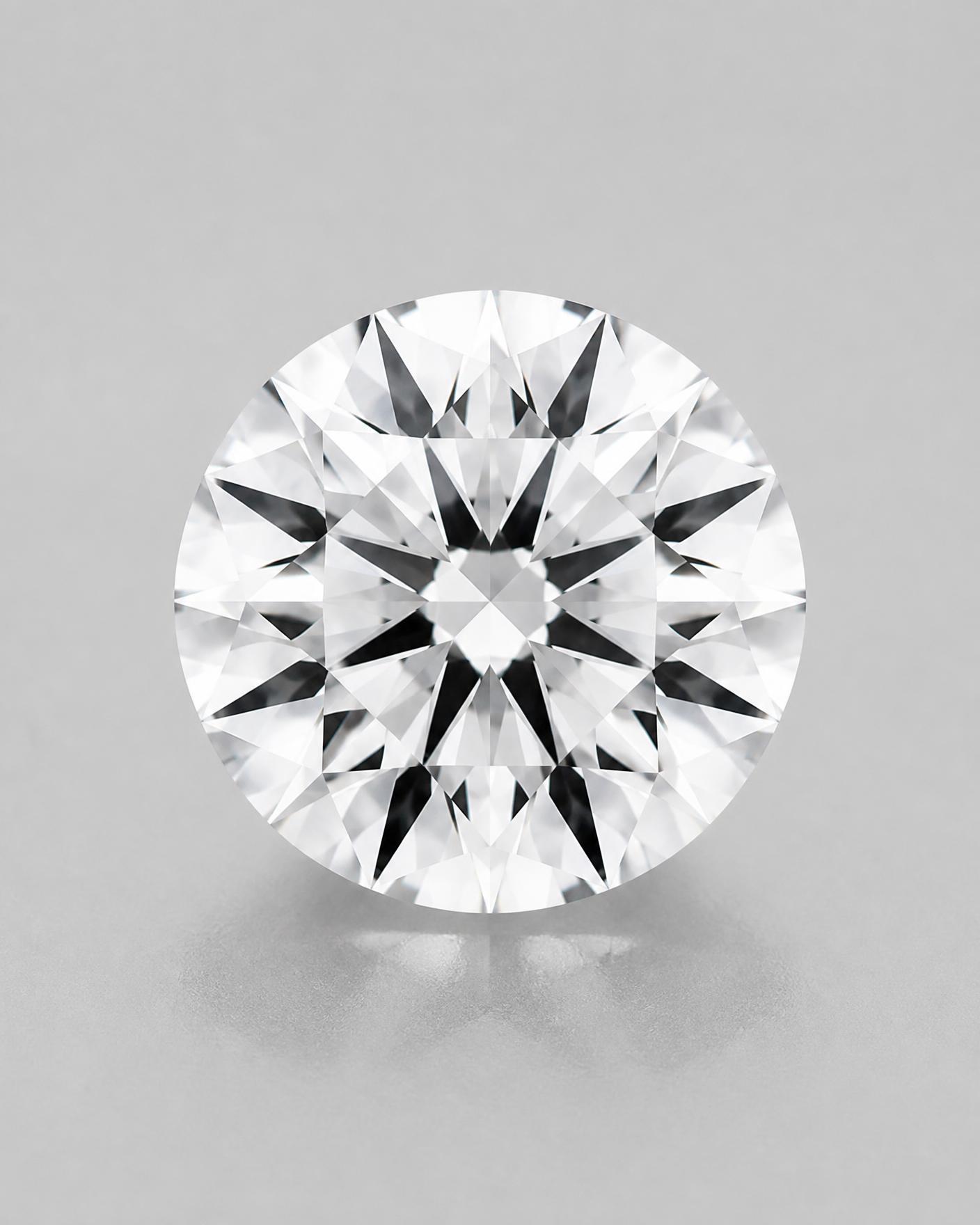
Cut, colour, clarity and carat describe a stone. Optical symmetry and fluorescence decide whether it is worth setting. Every CRFTD stone is measured against all six before it is offered to anyone.
The house sheet
The four Cs, tightened
Cut
Table 55–57%, crown 34.0–35.0°, pavilion 40.6–41.0°
The only C made by a human being. We hold a window one third the width of the GIA excellent band, because fire is lost long before a grade drops.
Colour
D to F for colourless, saturation-first for fancies
Colourless stones are graded face-down against masterstones in north light. Fancy colours are judged face-up, the way they are worn.
Clarity
VVS2 minimum, IF for all step cuts
A step cut hides nothing, so emerald and Asscher centres are taken at internally flawless only. No exceptions for weight.
Carat
Never the deciding argument
We will cut two per cent of weight away to correct a bow-tie or lift a crown. Yield is an accounting concern, not a jewellery one.
Beyond the four
Optical symmetry
Hearts-and-arrows imaged on every round brilliant. Any arrow that breaks or shifts off axis sends the stone back to the wheel.
Beyond the four
Fluorescence
Measured under long-wave UV and stated on our report. We reject medium and above in colourless goods, where it flattens transparency.
Growth & cutting
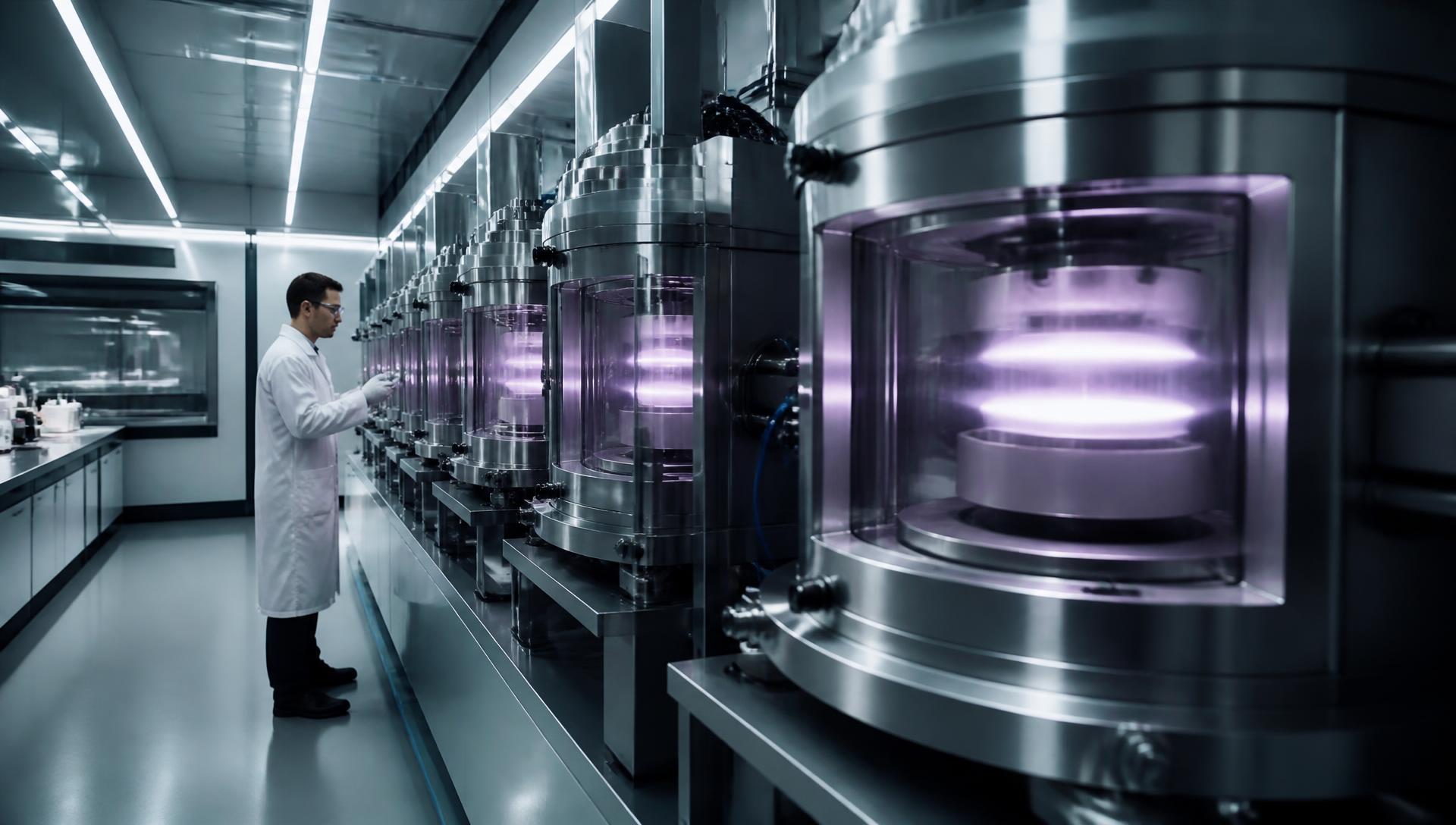
Seven cycles from carbon to light
- 01SeedA 3 mm plate of pure carbon lattice, oriented to the 100 plane.
- 02PlasmaMethane and hydrogen struck into plasma at 900 °C in a sealed chamber.
- 03DepositionCarbon lands atom by atom, roughly 0.1 mm of growth each day.
- 04RestSeven days on, one day cooling. Growth is stopped before strain can build.
- 05LaserThe tablet is planned on a 3D scan, then laser-sawn along the planned axis.
- 06BrutingThe girdle is turned diamond against diamond, never with a moulded tool.
- 07PolishFifty-seven facets brought in by hand on a cast-iron scaife, checked at 20×.
Grown against mined
The same stone, a different address
| Measure | CRFTD grown | Mined |
|---|---|---|
| Chemistry | Pure crystalline carbon | Pure crystalline carbon |
| Hardness | 10 Mohs | 10 Mohs |
| Refractive index | 2.417 | 2.417 |
| Traceability | Full chain, day one to setting | Partial, from first sale |
| Carbon footprint | Measured and published per stone | Rarely disclosed |
| Grading | IGI report plus our optical report | Independent report |
The ten shapes
Every cut we are willing to sign
Round Brilliant
57 facets · ratio 1.00
Oval Brilliant
57 facets · ratio 1.38
Pear Brilliant
58 facets · ratio 1.55
Marquise Brilliant
58 facets · ratio 2.00
Emerald Cut
50 facets · ratio 1.42
Cushion Brilliant
64 facets · ratio 1.10
Radiant Cut
70 facets · ratio 1.25
Heart Shape
59 facets · ratio 1.00
Trilliant
43 facets · ratio 1.00
Asscher Cut
58 facets · ratio 1.00
Certification
Two reports, not one
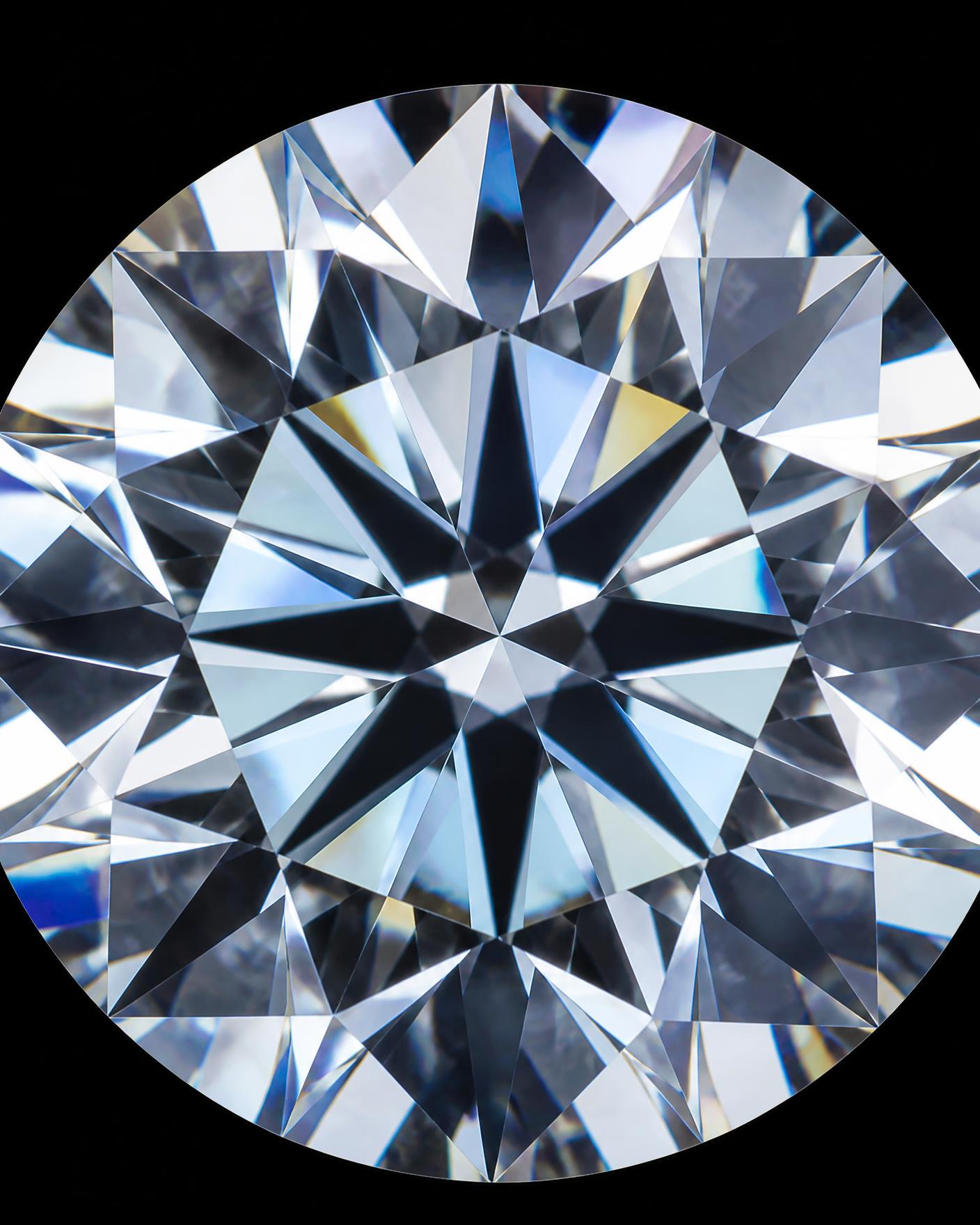
Every stone above 0.50 ct carries an independent IGI report and a CRFTD optical report: hearts-and-arrows imaging, ASET map, fluorescence reading and the growth record of the exact chamber and cycle it came from. Duplicate copies are issued free, for life.